Why Monk Fruit Has Become the Go-To Sweetener for Nutraceutical Brands
The nutraceutical industry is at a turning point. Consumers are reading ingredient labels more carefully than ever, demanding products that are both effective and clean. Sugar is increasingly viewed as a formulation liability, and artificial sweeteners carry a stigma that health-focused brands can no longer afford to ignore. In this environment, monk fruit has moved from a niche botanical ingredient to a mainstream formulation choice that smart brands are adopting at scale.
Monk fruit for nutraceutical brands represents more than a simple sugar swap. It offers a natural, zero-calorie sweetening solution backed by centuries of traditional use and supported by modern regulatory acceptance. For supplement manufacturers, health food companies, and functional beverage producers, monk fruit sweetener addresses the exact tension that defines today’s market: the need for great taste without compromise on health credentials.
This guide covers everything nutraceutical brands need to know before sourcing and working with monk fruit extract, from its biochemistry and regulatory profile to formulation applications, sourcing considerations, and the commercial value it creates for finished products.
Section 1: Understanding Monk Fruit and Its Active Compounds
What Is Monk Fruit?
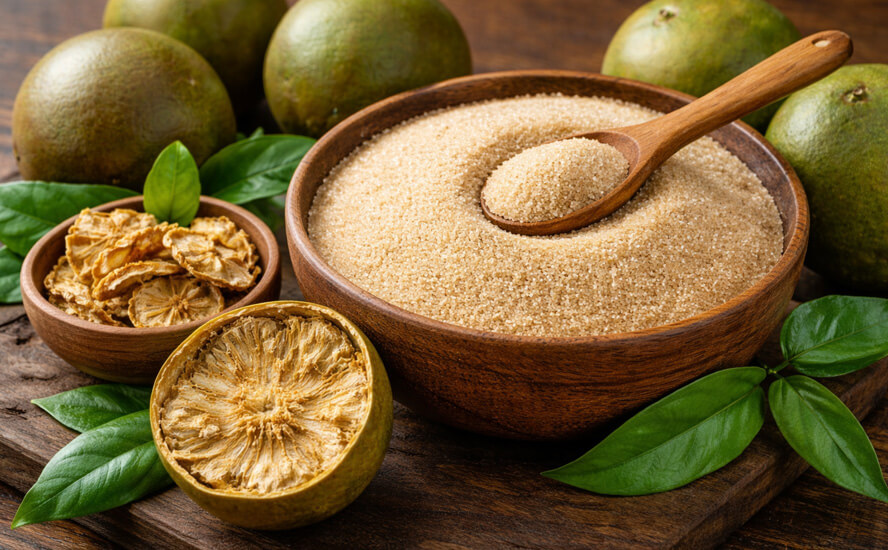
Monk fruit (Siraitia grosvenorii), also known as luo han guo, is a small green gourd native to the mountainous regions of southern China and northern Thailand. It has been cultivated and used in Chinese herbal medicine for over 800 years, valued both as a natural sweetener and a medicinal plant.
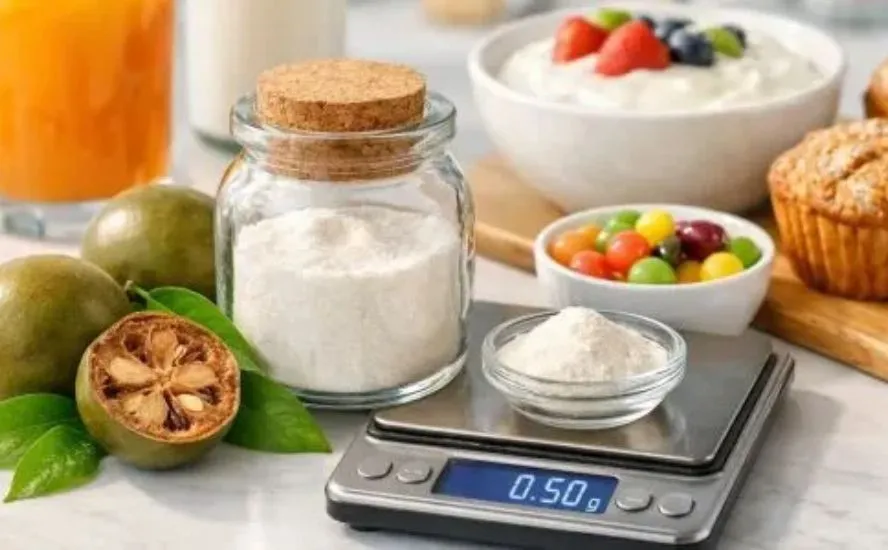
Unlike conventional fruits where sweetness comes from fructose or glucose, monk fruit derives its intense sweetness from a group of antioxidant compounds called mogrosides. These non-sugar glycosides are responsible for making monk fruit extract approximately 150 to 250 times sweeter than table sugar, depending on the concentration and extraction method.
The Science Behind Mogrosides
Mogrosides are the functional core of monk fruit extract. They are triterpene glycosides found in the fruit’s flesh and are extracted through a water-based process that separates them from the fruit’s natural sugars. The most commercially significant of these is Mogroside V, which typically serves as the benchmark for grading monk fruit extract purity and sweetness intensity.
Key mogroside types include:
- Mogroside V: The primary sweetening compound, present in the highest concentration in premium extracts. Higher Mogroside V content correlates with greater sweetness intensity and cleaner taste profiles.
- Mogroside IV: Present in smaller amounts, contributes to the overall sweetness character of the extract.
- Mogroside III: Found in lower concentrations, generally considered less sweet than Mogroside V.
- Siamenoside I: An exceptionally potent mogroside with sweetness intensity significantly above Mogroside V.
For nutraceutical brands, understanding mogroside content is critical because it directly affects dosage calculation, taste consistency, and cost efficiency across formulations. Working with a knowledgeable monk fruit extract supplier who can provide verified mogroside specifications with each batch is therefore non-negotiable for serious manufacturers.
Monk Nectar® supplies monk fruit extracts with verified Mogroside V content specifications, providing nutraceutical brands with the ingredient consistency their formulations depend on.
How Monk Fruit Extract Is Made
The extraction process begins with fresh or dried monk fruit harvested at peak ripeness. The fruit is crushed, and the juice undergoes a series of filtration and purification steps to isolate the mogrosides from natural fruit sugars, proteins, and fiber. The resulting extract is then dried into a fine powder.
The grade of monk fruit extract is largely defined by its Mogroside V percentage. Commercial grades typically range from 25% to 55% Mogroside V content, with higher concentrations commanding premium pricing but offering superior sweetness potency per gram. For nutraceutical applications that require minimal ingredient load, higher-grade extracts deliver better value despite their higher unit cost.
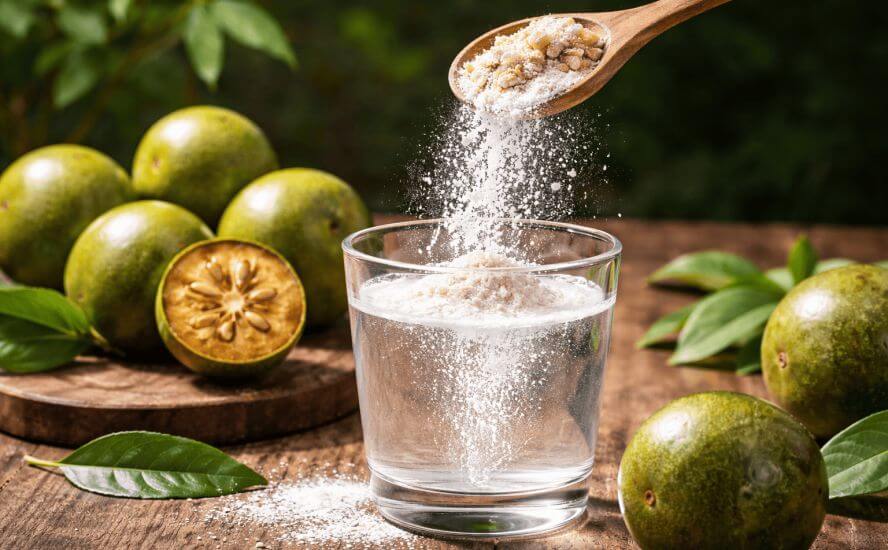
Water-soluble grades designed for beverage and liquid supplement applications, as well as oil-dispersible variants for specialized formulations, are also available. This range of formats gives nutraceutical formulators genuine flexibility when incorporating monk fruit sweetener into their product lines.
Section 2: The Regulatory and Safety Profile of Monk Fruit Extract
Global Regulatory Acceptance
One of the most compelling commercial advantages of monk fruit sweetener for supplement and food manufacturers is its strong regulatory standing across major global markets.
In the United States, the FDA has designated monk fruit extract as GRAS (Generally Recognized as Safe) with no prescribed acceptable daily intake (ADI) limit. This status significantly simplifies the regulatory pathway for nutraceutical brands launching products in the US market.
In the European Union, monk fruit extract currently holds Novel Food status under Regulation (EU) 2015/2283, permitting its use in specified food and beverage categories. The regulatory environment in Europe continues to evolve, and brands formulating for European markets should confirm current approved use categories for their specific product types.
Across Asian markets, including China, Japan, South Korea, and Australia/New Zealand, monk fruit extract enjoys broad regulatory acceptance given its long history of traditional use in the region.
For nutraceutical brands exporting products globally, the combination of GRAS status in the US and growing regulatory acceptance worldwide makes monk fruit extract a lower-risk natural sweetener choice compared to ingredients with more restricted international regulatory profiles.
Safety and Tolerability
Unlike some sugar alcohols such as sorbitol and maltitol that are associated with gastrointestinal side effects at higher intakes, monk fruit extract is generally well tolerated even at elevated consumption levels. Because mogrosides are not metabolized as carbohydrates by the body, they do not raise blood glucose or insulin levels, making monk fruit extract particularly appropriate for formulations targeting diabetic consumers, pre-diabetic individuals, and those following low-glycemic or ketogenic dietary patterns.
The absence of a bitter or chemical aftertaste, which is a common consumer complaint about stevia and many artificial sweeteners, makes monk fruit extract one of the few natural sweetener options that delivers a clean, pleasant sweetness profile without significant sensory compromises.
Clean Label Compliance
Clean label is not a passing marketing trend. It represents a fundamental shift in how health-conscious consumers evaluate products, and it directly influences purchasing decisions in the nutraceutical category. Brands formulating with monk fruit extract gain immediate clean label credentials because it is a naturally derived ingredient with a recognizable origin story.
Monk fruit extract appears on product labels as ‘monk fruit extract’ or ‘luo han guo extract,’ both of which resonate positively with informed consumers. For brands pursuing non-GMO certification, organic certification, or specific religious dietary certifications (Halal, Kosher), monk fruit extract is compatible with all major certification frameworks, subject to the processing and supply chain standards of individual certification bodies.
Clean label sweeteners like monk fruit extract are no longer optional for premium nutraceutical brands. They are a baseline expectation from health-focused consumers who scrutinize every ingredient.
Section 3: Nutraceutical Applications of Monk Fruit Sweetener
Dietary Supplements and Capsule Formulations
For powdered dietary supplements, protein formulations, and encapsulated products, monk fruit extract addresses a persistent formulation challenge: improving palatability without adding calories, sugar, or artificial ingredients. Protein powders, meal replacement blends, greens powders, and superfood complexes all benefit from monk fruit’s sweetness enhancement because it masks the inherent bitterness of many active ingredients.
In capsule and softgel formulations, monk fruit extract is used in coating systems and chewable supplement formats where sweetness plays a role in consumer experience. The high sweetness intensity of monk fruit extract means effective sweetening is achieved at very low inclusion rates, which keeps the ingredient’s contribution to label space and formulation cost minimal.
Functional Beverages and Drink Mixes
The functional beverage segment is one of the highest-growth areas within the nutraceutical industry, and monk fruit sweetener has become an important formulation tool for brands developing ready-to-drink products, effervescent tablets, and instant drink mix sachets.
Water-soluble monk fruit extract blends seamlessly into liquid systems across a wide pH range, maintaining stability in both neutral and acidic beverage formulations. This makes it effective for use in electrolyte drinks, immunity boosters, adaptogen tonics, collagen drinks, and pre-workout beverages where an acidic base is common.
From a taste perspective, monk fruit extract in beverages produces a sweetness profile that consumers consistently rate favorably compared to stevia-sweetened products, primarily because monk fruit does not carry stevia’s characteristic licorice or bitter finish.
Gummies, Soft Chews, and Confectionery-Style Supplements
Gummy supplements have transformed from a niche delivery format to a mainstream preference across all age groups. For manufacturers producing gummy vitamins, CBD gummies, probiotic gummies, and collagen chews, monk fruit sweetener offers a compelling alternative to sugar, glucose syrup, and maltodextrin-heavy formulations.
Monk fruit extract is compatible with standard gummy manufacturing processes using gelatin and pectin-based systems. When combined with polyols like erythritol or isomalt, it enables fully sugar-free gummy formulations that maintain acceptable texture and sweetness while eliminating added sugar from the nutrition facts panel.
This combination of monk fruit and erythritol, sometimes referred to as a natural sweetener blend, is increasingly common in premium gummy supplement formulations because erythritol provides bulk and helps control water activity while monk fruit provides the sweetness intensity.
Sports Nutrition Products
Sports nutrition is a category where both performance and clean ingredient philosophy matter equally to consumers. Athletes and fitness enthusiasts are among the most label-literate consumers in the supplement market, and they increasingly reject products containing sucralose, acesulfame potassium, and other artificial sweeteners.
Monk fruit sweetener for supplements in the sports nutrition category addresses this preference directly. Pre-workout powders, BCAAs, creatine blends, post-workout recovery drinks, and isotonic beverages can all be sweetened effectively with monk fruit extract without caloric contribution, which is particularly important for calorie-controlled nutrition programs.
Weight Management and Metabolic Health Products
For brands formulating in the weight management, blood sugar support, and metabolic health categories, monk fruit extract is arguably the most strategically aligned natural sweetener available. Its zero glycemic index, zero calorie contribution, and natural origin combine to create an ingredient that reinforces the core health message of products in these categories.
Meal replacement shakes, appetite control supplements, fiber-based weight management products, and low-glycemic snack formulations all represent opportunities where monk fruit’s functional and marketing benefits are immediately applicable.
Children’s and Senior Nutrition Products
Children’s supplements and senior-focused nutrition products represent two categories where safety, palatability, and clean label credentials carry the highest weight. Monk fruit extract is appropriate for pediatric supplement formulations given its strong safety profile and absence of an ADI limit. In senior nutrition products, where sugar management is often medically relevant, monk fruit extract provides sweetness without the metabolic concerns associated with sugar.
Section 4: Formulation Considerations and Technical Guidance
Blending and Synergy with Other Sweeteners
In most nutraceutical applications, monk fruit extract works most effectively as part of a sweetener system rather than as a standalone sweetening agent. This is because while monk fruit delivers excellent sweetness intensity, it does not contribute to bulk, mouthfeel, or texture in the way that sugar does.
The most common and effective pairings include:
- Monk Fruit + Erythritol: The industry’s most popular natural sweetener combination. Erythritol provides bulk and a mild sweetness that complements monk fruit’s high-intensity sweetness, creating a more complete sugar-like sensory experience.
- Monk Fruit + Allulose: An emerging combination offering excellent sugar-like texture and browning properties, suitable for baked supplement bars and functional snack formats.
- Monk Fruit + Stevia: Both are natural, zero-calorie sweeteners, and the combination allows formulators to balance out each ingredient’s aftertaste characteristics at lower individual usage levels.
- Monk Fruit + Inulin or Chicory Root Fiber: Common in prebiotic supplement formulations where fiber contributes bulk and provides a prebiotic benefit alongside monk fruit’s sweetness.
Usage Rates and Dosage Guidelines
Monk fruit extract usage rates vary based on the Mogroside V content of the specific extract being used and the desired sweetness level of the final product. As a general reference:
- In dry powder formulations, monk fruit extract is typically used at 0.01% to 0.5% of total formulation weight, depending on extract potency.
- In liquid formulations, effective usage rates typically fall between 0.005% and 0.1% by weight.
- When blended with erythritol, monk fruit extract usage rates are generally at the lower end of these ranges because erythritol contributes supplemental sweetness.
Formulators should always request detailed specification sheets from their monk fruit extract supplier, as the Mogroside V percentage directly determines the appropriate usage rate for a given formulation. Working with a supplier who provides consistent, well-documented extract grades eliminates guesswork and batch-to-batch variation.
Stability and Processing Compatibility
Monk fruit extract demonstrates good thermal stability, making it suitable for formulations that undergo heat processing including spray drying, extrusion, and high-temperature sterilization processes. It maintains sweetness potency across a broad pH range from approximately 2.5 to 8.0, which covers the vast majority of nutraceutical formulations.
Extended shelf life studies support the use of monk fruit extract in products with 24-month shelf life requirements, provided proper moisture control and packaging conditions are maintained. The extract is hygroscopic, meaning it will absorb moisture from the environment if not properly sealed, which is a standard consideration for any powdered ingredient in nutraceutical manufacturing.
Masking and Flavor Enhancement
Beyond pure sweetening, monk fruit extract serves as an effective flavor modulator in nutraceutical formulations. It is particularly effective at masking the bitterness of B vitamins, certain amino acids like arginine and glutamine, herbal extracts including ashwagandha and turmeric, and many mineral compounds.
This masking capability reduces the need for additional flavoring agents, which supports cleaner label formulations. For brands developing unflavored or minimally flavored supplement products, monk fruit extract can meaningfully improve palatability with a very small addition.
Brands that work with Monk Nectar® gain access to technical formulation support alongside ingredient supply, helping ensure that monk fruit extract is incorporated optimally into each product application.
Section 5: Market Trends Driving Monk Fruit Adoption in Nutraceuticals
The Sugar Reduction Imperative
Sugar reduction is no longer simply a consumer preference, it is a regulatory and commercial imperative for health product manufacturers. Governments across multiple markets, from the UK’s Soft Drinks Industry Levy to India’s growing regulatory scrutiny of added sugars in health products, are increasingly encouraging or mandating sugar reduction in processed food and supplement categories.
For nutraceutical brands, this creates a direct commercial incentive to accelerate the adoption of sugar alternatives. Monk fruit extract, with its established safety profile, natural origin, and zero-calorie contribution, is well positioned to absorb demand that was previously addressed by artificial sweeteners as those ingredients face growing consumer resistance.
Clean Label and Ingredient Transparency
The clean label movement has fundamentally changed how consumers evaluate health products. Ingredients that consumers cannot recognize, pronounce, or associate with natural origins are increasingly avoided, even when those ingredients are technically safe. Monk fruit extract benefits from an origin story that resonates with health-conscious buyers: a small green fruit from China’s Guangxi province, used in traditional medicine for centuries, extracted through a water-based process.
This narrative translates directly to product marketing advantages for brands using monk fruit sweetener. Front-of-pack claims such as ‘sweetened with monk fruit,’ ‘naturally sweetened,’ and ‘zero sugar, zero artificial sweeteners’ command attention in a crowded supplement market.
Keto, Low-Carb, and Diabetic-Friendly Product Segments
The ketogenic diet and low-carbohydrate lifestyle segment represents one of the fastest-growing consumer cohorts in the nutraceutical market. This audience is highly educated about the metabolic impact of different sweeteners and actively seeks out products that maintain ketosis without hidden carbohydrates.
Monk fruit extract, with its zero net carbs and zero glycemic index, meets the strict formulation requirements of keto-friendly and diabetic-friendly product designations. For brands building in these segments, monk fruit is not merely a sweetener preference, it is a product requirement.
Premium Positioning and Price Premium Opportunity
Products formulated with monk fruit extract can authentically command a price premium over those using artificial sweeteners or high-sugar formulations. This pricing power reflects genuine ingredient cost differences as well as the value consumers assign to cleaner formulations. For nutraceutical brands competing on quality rather than price, monk fruit sweetener provides a credible, substantiated basis for premium positioning.
India as a Growing Manufacturing Hub for Monk Fruit Products
India has established itself as a major center for nutraceutical manufacturing, with a rapidly growing domestic supplement market and significant contract manufacturing capacity serving global brands. As Indian nutraceutical manufacturers expand their product portfolios to include clean label, natural sweetener formulations, access to a reliable monk fruit supplier in India has become a practical operational priority.
Monk Nectar® operates at the intersection of this growing demand, providing monk fruit extract wholesale to nutraceutical manufacturers, supplement brands, and health food companies across India and international markets. With direct supply chain relationships and quality systems aligned to export standards, Monk Nectar® supports brands at every scale from emerging startups to established manufacturers managing high-volume production runs.
Section 6: Sourcing Monk Fruit Extract – What Nutraceutical Brands Must Know
Why Sourcing Quality Matters More Than Price
In commodity ingredient markets, price is often the primary sourcing criterion. Monk fruit extract is not a commodity. The quality, purity, and consistency of monk fruit extract vary substantially between suppliers, and these variations have direct consequences for product performance, consumer experience, and regulatory compliance.
The key quality parameters nutraceutical brands should evaluate when selecting a monk fruit extract supplier include:
- Mogroside V Specification and Certificate of Analysis (COA): Every batch should be accompanied by a COA from an accredited third-party laboratory confirming the Mogroside V percentage and heavy metal testing results.
- Microbiological Standards: Monk fruit extract should meet pharmaceutical-grade microbiological specifications including testing for total plate count, yeast and mold, Salmonella, E. coli, and Staphylococcus aureus.
- Pesticide Residue Testing: Given that monk fruit is an agricultural product, pesticide residue testing in accordance with applicable regulatory standards is an important quality check.
- Allergen and GMO Status Documentation: Non-GMO verification and allergen-free status documentation support certification requirements for finished products.
- Stability Data: Shelf life data and stability testing results inform product development decisions around packaging and shelf life claims.
Evaluating a Monk Fruit Supplier
Selecting the right monk fruit distributor or supplier is a strategic decision that extends beyond the immediate transaction. The questions nutraceutical brands should ask potential suppliers include:
- Do you provide batch-specific COAs from accredited third-party laboratories?
- What is your minimum order quantity and how do you handle smaller development orders for new product launches?
- Can you supply multiple extract grades (e.g., 25%, 40%, 55% Mogroside V) to support different formulation requirements?
- What are your lead times and inventory position for consistent supply?
- Do you hold relevant food safety certifications such as FSSAI registration, ISO 22000, or HACCP?
- Can you provide regulatory documentation to support product registrations in target export markets?
A supplier that can answer these questions with transparency and documentation is a supplier equipped to support a serious nutraceutical manufacturing operation.
Monk Nectar®: India’s Trusted Monk Fruit Supplier and Exporter
Monk Nectar® has built its position in the Indian monk fruit supply market on a foundation of quality assurance, supply chain reliability, and genuine ingredient expertise. As a dedicated monk fruit supplier, distributor, and exporter in India, Monk Nectar serves nutraceutical manufacturers, food and beverage brands, and health supplement companies across domestic and international markets.
The depth of product knowledge at Monk Nectar® goes beyond basic ingredient supply. The team understands the formulation challenges nutraceutical brands face and is equipped to provide guidance on extract selection, usage rates, blending strategies, and regulatory documentation requirements for different markets.
For brands sourcing monk fruit extract wholesale for the first time, or for established manufacturers looking to secure a more reliable supply chain, Monk Nectar® offers the combination of product quality, supply consistency, and technical knowledge that professional nutraceutical operations require.
Ready to explore monk fruit extract solutions for your nutraceutical brand? Connect with the Monk Nectar® team to discuss your formulation requirements, request a sample, or obtain bulk pricing information tailored to your production volume.
Section 7: Commercial Benefits of Using Monk Fruit in Your Nutraceutical Products
Label Claims and Marketing Differentiation
Formulating with monk fruit sweetener opens a range of commercially valuable label claims that resonate with health-focused consumers. Depending on the specific product formulation and applicable regulatory requirements in target markets, brands may be able to use claims such as:
- No Added Sugar
- Naturally Sweetened
- Zero Glycemic Index Sweetener
- Keto-Friendly
- Diabetic-Friendly (subject to regulatory approval in specific markets)
- Non-GMO
- Vegan and Vegetarian
- No Artificial Sweeteners
Each of these claims addresses a specific consumer concern or lifestyle alignment that drives purchasing behavior. For nutraceutical brands competing for shelf space and consumer attention, the ability to credibly make multiple claims from a single ingredient choice represents significant marketing leverage.
Consumer Trust and Repeat Purchase Rates
Health supplement purchases are often trial-driven: a consumer discovers a product, tries it, and if the experience meets expectations, they return. Palatability is a significant factor in this repeat purchase cycle, and monk fruit’s clean sweetness profile supports positive product experience in ways that bitter or chemically-tasting alternatives do not.
Additionally, consumers who notice that a brand has invested in premium natural ingredients like monk fruit extract rather than defaulting to cheaper artificial alternatives tend to develop stronger brand loyalty. The perception that a brand cares about ingredient quality creates a trust premium that influences long-term customer lifetime value.
Positioning for Retailer and Distribution Channel Requirements
As natural and specialty retail channels have grown, retailers have developed their own ingredient standards and preferred supplier criteria for nutraceutical brands they stock. Major natural retailers and e-commerce platforms serving health-conscious consumers increasingly favor brands that avoid artificial sweeteners, and some have explicit policies restricting certain synthetic additives.
Brands formulating with monk fruit sweetener are better positioned to meet these channel requirements without reformulation, reducing the operational disruption that often accompanies retailer-mandated ingredient changes.
Section 8: Working with Monk Nectar® – Partnership Beyond Supply
What Sets Monk Nectar® Apart
Many ingredients suppliers operate purely as transaction-based distributors. Monk Nectar® operates differently. The company’s model is built around being a genuine ingredient partner for the nutraceutical brands it works with, providing not just monk fruit extract wholesale but the knowledge, documentation, and support infrastructure that helps brands succeed with monk fruit across their product lines.
Key aspects of the Monk Nectar® partnership model include:
- Technical Documentation Support: Providing specification sheets, safety data sheets, regulatory dossiers, and market-specific documentation that nutraceutical manufacturers require for product registration and compliance.
- Sample Availability: Development samples of different monk fruit extract grades to support formulation trials before committing to bulk orders.
- Flexible Order Structures: Supply options that accommodate both small-scale development requirements and large-volume production orders, supporting brands at different stages of growth.
- Consistent Quality Assurance: Batch-by-batch quality control with third-party testing documentation, ensuring that the extract grade specified during formulation development is what arrives for production.
- Export Support: For international brands or Indian manufacturers exporting finished nutraceutical products, Monk Nectar® provides the export documentation and compliance support that cross-border ingredient supply requires.
Industries and Applications Served
Monk Nectar’s monk fruit extract supply serves a broad range of industry applications, including:
- Nutraceutical supplement manufacturers
- Protein powder and sports nutrition brands
- Functional food and beverage producers
- Ayurvedic and herbal product manufacturers
- Children’s nutrition and pediatric supplement companies
- Clinical nutrition and medical food manufacturers
- Natural cosmetics and personal care brands using food-grade sweeteners
- Private label supplement manufacturers serving retail and e-commerce channels
Getting Started with Monk Nectar®
The process of working with Monk Nectar® begins with a straightforward conversation about your formulation requirements, production volume, and target markets. From that starting point, the team can recommend the appropriate monk fruit extract grade, provide initial pricing guidance, arrange sample shipments for development trials, and outline the documentation support available for your specific regulatory context.
Whether you are a growing supplement startup looking to source monk fruit for nutraceutical products for the first time, or an established manufacturer seeking a more reliable monk fruit extract supplier in India for your existing production, Monk Nectar® has the product range and supply infrastructure to support your requirements.
Reach out to Monk Nectar® at monkfruit.in to discuss your monk fruit ingredient requirements. The team is ready to provide samples, specifications, and bulk pricing to support your formulation and production planning.
Conclusion: Monk Fruit Is the Ingredient Your Nutraceutical Brand Has Been Looking For
The case for monk fruit for nutraceutical brands is built on a genuinely compelling combination of factors that few natural ingredients can match. It is intensely sweet without contributing calories or glycemic load. It has a clean, pleasant taste profile that consumers accept without the reservations that commonly surround stevia or artificial sweeteners. It carries strong regulatory acceptance in major global markets. It supports a wide range of formulation applications from powders and gummies to beverages and functional foods. And it carries the clean label credentials that health-focused consumers increasingly demand as a baseline, not a premium.
For nutraceutical brands, the question is no longer whether to use monk fruit sweetener but how to source it effectively, how to integrate it optimally into formulations, and how to communicate its benefits to end consumers. Monk Nectar® exists to help Indian and international nutraceutical brands answer all three of those questions with confidence.
As India’s trusted monk fruit supplier, distributor, and exporter, Monk Nectar® combines premium ingredient quality with genuine formulation knowledge and supply chain reliability. The company’s mission is to help nutraceutical brands build products that are better for consumers and better for business, starting with one of nature’s most effective sweetening ingredients.
Explore what monk fruit extract can do for your formulations. Contact Monk Nectar® today.
FREQUENTLY ASKED QUESTIONS
Q1. What is the difference between monk fruit extract grades, and which grade is best for nutraceutical formulations?
Monk fruit extract is graded primarily by its Mogroside V content, which typically ranges from 25% to 55% in commercial extracts. Higher Mogroside V percentages indicate greater sweetness potency per gram, meaning less extract is needed to achieve the desired sweetness level. For most nutraceutical applications including protein powders, gummies, and supplement drinks, a 40% to 50% Mogroside V grade offers a practical balance between sweetness intensity and cost efficiency. Monk Nectar® supplies multiple extract grades and can help brands identify the appropriate specification for their specific formulation requirements.
Q2. Is monk fruit extract safe for use in supplements formulated for diabetic consumers?
Yes. Monk fruit extract has a zero glycemic index because mogrosides, the active sweetening compounds, are not metabolized as carbohydrates. They do not raise blood glucose or insulin levels, making monk fruit sweetener one of the most appropriate natural sweetener choices for products formulated for diabetic consumers, individuals following low-glycemic diets, and those managing blood sugar levels. The FDA’s GRAS designation for monk fruit extract further supports its suitability for use across a wide consumer population, including health-vulnerable groups.
Q3. Can monk fruit extract be used in hot-processed nutraceutical formulations like spray-dried powders and extruded bars?
Monk fruit extract demonstrates good thermal stability and is compatible with common nutraceutical manufacturing processes including spray drying, extrusion, hot-fill beverage processing, and baking-based formats such as functional bars. It maintains its sweetness characteristics across the temperature ranges typically encountered in these processes. For applications requiring extended high-temperature exposure, brands should request specific stability data from their supplier to confirm performance under their exact processing conditions. Monk Nectar® provides technical data to support formulation decisions across different manufacturing processes.
Q4. What documentation does Monk Nectar® provide with monk fruit extract orders for regulatory compliance purposes?
Monk Nectar® provides a full documentation package with each supply of monk fruit extract, including batch-specific Certificates of Analysis (COA) from accredited third-party laboratories confirming Mogroside V content, heavy metals, microbiological parameters, and pesticide residues. Additional documentation including allergen declarations, GMO status statements, safety data sheets, and regulatory reference documents for major markets is available upon request. For brands requiring FSSAI, GRAS, or other market-specific regulatory documentation, Monk Nectar’s team can advise on the appropriate documentation pathway.
Q5. What is the minimum order quantity for monk fruit extract from Monk Nectar®, and do you supply to brands outside India?
Monk Nectar® offers flexible order structures to accommodate nutraceutical brands at different stages of development and production scale. Development sample quantities are available for formulation trials, and commercial order quantities are structured to support both growing brands managing smaller production runs and established manufacturers with high-volume requirements. Monk Nectar® operates as a monk fruit exporter serving international markets in addition to its domestic Indian supply operations. Brands outside India seeking a reliable monk fruit extract supplier with export experience and documentation support are encouraged to contact Monk Nectar® directly through monkfruit.in to discuss their specific requirements.
Partner with Monk Nectar® for Premium Monk Fruit Ingredients
India’s Trusted Monk Fruit Supplier, Distributor & Exporter for Nutraceutical Brands
Whether you are formulating a new supplement product, scaling an existing line, or sourcing monk fruit extract wholesale for contract manufacturing, Monk Nectar® is equipped to support your requirements with premium-grade ingredients, comprehensive documentation, and genuine formulation expertise.
Request samples, bulk pricing, or a formulation consultation:
Visit monkfruit.in | Contact the Monk Nectar® Team Today