Consumer demand has shifted — dramatically. Walk through any supermarket today, and you will notice that “no added sugar,” “sugar-free,” and “naturally sweetened” labels are everywhere. This is not a passing trend. Millions of health-conscious buyers are actively checking ingredient panels and walking away from products that rely on refined sugar or synthetic sweeteners.
For food brands, this creates both a challenge and an opportunity. How do you cut sugar without cutting taste? How do you keep a product shelf-stable, clean-labelled, and commercially viable — all at the same time?
That is exactly where monk fruit steps in. Used for centuries in traditional Chinese medicine, monk fruit has become one of the most strategically valuable ingredients a food brand can work with today. In this article, we will show you why more brands are choosing monk fruit sweetener as their go-to ingredient for sugar-free product development — and how Monk Nectar’s high-quality monk fruit extract can help you get there.
What Makes Monk Fruit the Ideal Sugar Substitute for Food Brands?
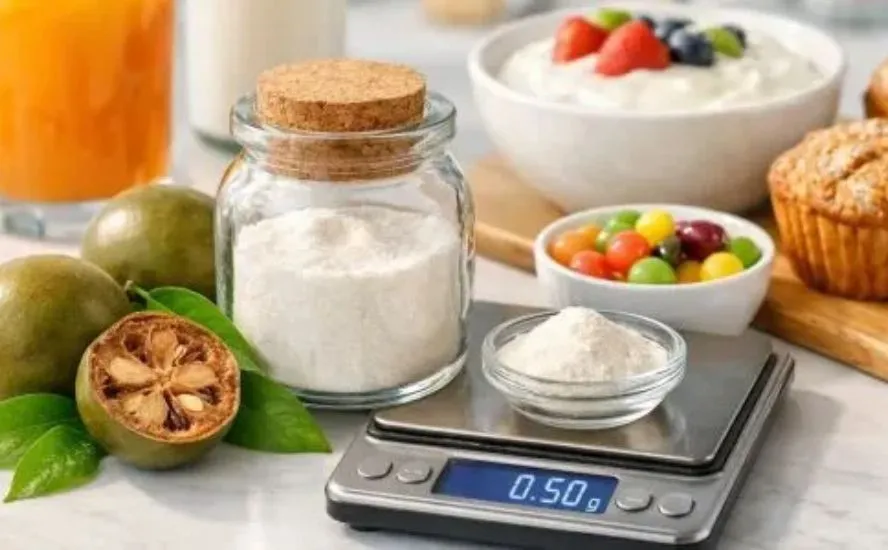
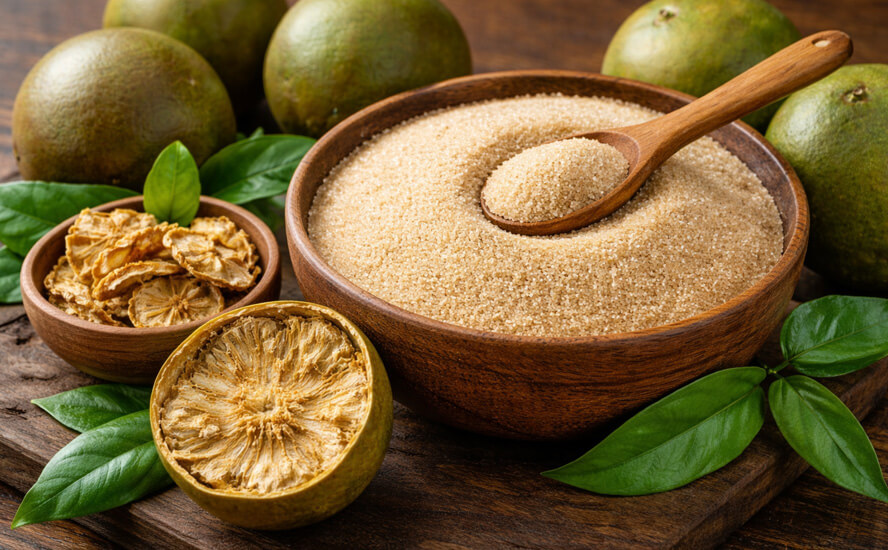
Monk fruit (scientific name: Siraitia grosvenorii) grows primarily in southern China and northern Thailand. Its sweetness comes from a group of compounds called mogrosides — not from fructose or glucose — which is why monk fruit delivers zero calories and has zero impact on blood sugar levels.
For product developers, this is a game-changer. Here is why:
a) Zero calories, genuine sweetness. Monk fruit is approximately 150–250 times sweeter than table sugar by weight. Even in small concentrations, it delivers the sweetness your customers expect without any caloric payload.
b) No bitter aftertaste. One of the biggest complaints with stevia-based formulations is the lingering bitter or liquorice-like aftertaste. Monk fruit does not carry that baggage. It has a clean, pleasant sweetness profile that works across a wide range of products.
c) Non-glycaemic. It does not raise blood glucose levels, which makes it suitable for diabetics, keto dieters, and anyone on a low-glycaemic eating plan.
d) Naturally derived. Unlike artificial sweeteners such as aspartame or sucralose, monk fruit extract is from a real food source. It carries a clean-label appeal that modern consumers actively look for.
e) Regulatory acceptance. Monk fruit extract holds GRAS (Generally Recognised as Safe) status in the United States. It has also received approval across the European Union, Canada, Australia, and multiple Asian markets — making it viable for export-ready product lines.
How Monk Fruit Sweetener Performs Across Different Food Categories
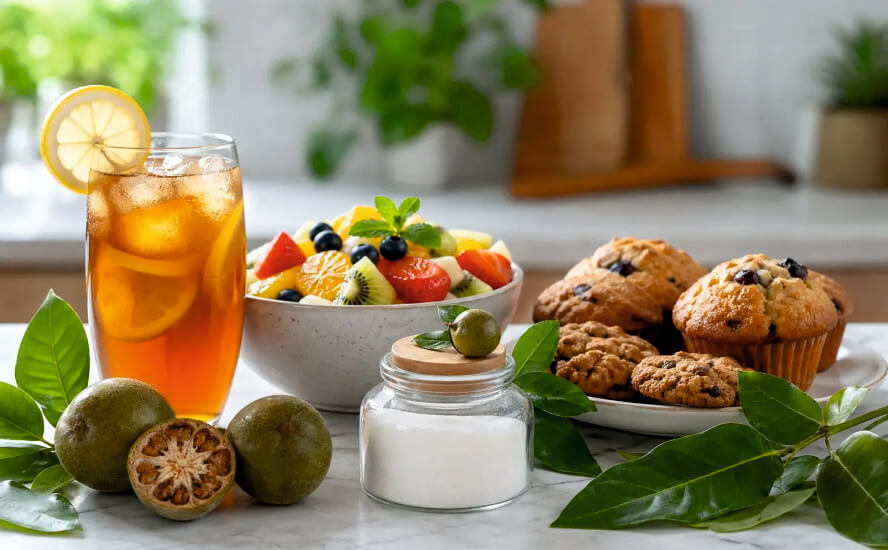
One of monk fruit’s biggest advantages is its versatility. It is not limited to a single product type. Let us break down how it performs across the categories that food brands most commonly develop.
1. Beverages
Monk fruit sweetener works exceptionally well in ready-to-drink (RTD) beverages, health drinks, functional shots, and flavoured waters. It dissolves cleanly without cloudiness and does not react adversely with common beverage additives like citric acid or vitamin C. Brands formulating electrolyte drinks, detox waters, and wellness tonics regularly choose monk fruit for its stability in liquid systems.
2. Baked Goods
Baking with monk fruit requires some formulation care — sugar plays structural and browning roles in baking, so you often need to supplement with bulking agents when substituting. However, monk fruit still delivers the sweetness component cleanly. It is particularly effective in cookies, protein bars, muffins, and keto-friendly baked goods, where a dense, moist texture is already the goal.
3. Dairy and Plant-Based Alternatives
Yoghurts, flavoured milks, ice creams, and plant-based dairy alternatives benefit from monk fruit’s clean sweetness. It pairs particularly well with natural fruit flavours and vanilla notes, making it a natural fit for yoghurt cups, smoothie blends, and oat-milk-based drinks.
4. Condiments and Sauces
Sugar is a key flavour balancer in ketchup, barbecue sauces, salad dressings, and marinades. Monk fruit can replace that sweetness contribution without adding calories, allowing brands to market these products as “no added sugar” while maintaining flavour parity.
5. Confectionery and Snacks
The better-for-you snack segment is booming. Brands making sugar-free chocolates, gummies, protein balls, and nut bars are increasingly turning to monk fruit as the core sweetener — often blending it with erythritol to achieve the right texture and mouthfeel.
Why Clean-Label Positioning Makes Monk Fruit a Branding Asset
Let us be direct: when your product carries an ingredient that consumers recognise and trust, your brand wins. Monk fruit passes the clean-label test with flying colours.
Compare that to artificial sweeteners. Aspartame has faced decades of consumer scepticism. Saccharin was linked to cancer concerns in early studies (since debunked, but the reputational damage lingered). Sucralose raised questions about gut health. None of them offer the “I’m eating something natural” assurance that today’s consumer demands.
Monk fruit sweetener sits in a different category entirely. It comes from a fruit. It has a long history of traditional use. And it has passed rigorous modern safety evaluations across major global regulatory bodies.
For your marketing team, this means monk fruit is not just an ingredient — it is a story. “Sweetened with monk fruit” on your packaging communicates health, naturalness, and care in a way that “contains sucralose” simply does not.
At Monk Nectar, we supply monk fruit extract that meets the quality standards required for clean-label food production. Our extract is produced using rigorous quality controls to ensure consistent mogroside concentrations — which matters enormously when you are scaling a product from a small-batch prototype to a commercial production run.
Formulation Tips: Getting the Best Out of Monk Fruit in Your Product Development
If you are just beginning to work with monk fruit, here are some practical formulation principles that experienced food technologists follow.
1. Start with a sweetness baseline. Because monk fruit is so intensely sweet, you need to calibrate your dosage carefully. Too little and your product is under-sweetened. Too much and you introduce an odd, cloying finish. Begin at around 0.03–0.05% of the total formulation weight and adjust from there.
2. Consider blending. Monk fruit sweetener works particularly well in combination with erythritol, allulose, or inulin. These bulking agents make up for the volume that sugar provides and often smooth out the overall flavour curve.
3. Account for heat stability. Monk fruit extract is thermally stable up to approximately 200°C, making it suitable for most baking and cooking applications without degradation.
4. Match flavour systems carefully. Monk fruit pairs naturally with citrus, tropical fruit, vanilla, and dairy flavours. It can sometimes amplify certain flavour notes, so work closely with your flavour house when developing new SKUs.
5. Test across storage conditions. A product that tastes great on Day 1 needs to taste just as good at the end of its shelf life. Monk fruit is generally stable, but conduct accelerated shelf-life studies to confirm there is no off-flavour development in your specific formulation matrix.
Regulatory and Labelling Advantages for Food Brands Using Monk Fruit
Food brands expanding into health-focused retail channels — premium grocery, health food chains, D2C wellness platforms — need to tick specific regulatory boxes. Monk fruit helps you tick many of them at once.
“No added sugar” claims become straightforward when monk fruit is your primary sweetener, because mogrosides are not classified as sugars.
Diabetic-friendly positioning is viable because monk fruit does not affect insulin response.
Keto and low-carb certifications are within reach because monk fruit contributes zero net carbs.
Vegan and plant-based certifications are unaffected — monk fruit is plant-derived.
India-specific regulatory context: Monk fruit extract is currently reviewed under FSSAI guidelines as a novel food ingredient in India. Brands operating in or exporting from India should stay updated on FSSAI notifications and work with a regulatory consultant to ensure compliant use. Monk Nectar® actively tracks these developments and can provide guidance to partner brands navigating the Indian regulatory environment.
Why Partnering with the Right Monk Fruit Supplier Matters
Not all monk fruit extracts are created equal. The quality of your final product depends directly on the quality of the extract you source. Here is what to look for:
1. Mogroside V content. This is the primary active compound responsible for monk fruit’s sweetness. High-quality extract typically contains 25–50% Mogroside V. Know what percentage you are buying.
2. Extraction method. A clean water extraction process preserves the integrity of the mogrosides and avoids solvent residues. Ask your supplier about their extraction process.
3. Third-party testing. Reputable suppliers provide Certificates of Analysis (COA) from accredited laboratories covering heavy metals, microbial counts, and mogroside content.
4. Consistency batch to batch. For commercial production, variation between batches is a serious problem. Work with a supplier who can demonstrate tight quality control across production runs.
5. Traceability. Know where the fruit comes from. Authenticated sourcing from the Guangxi region of China — the traditional home of monk fruit cultivation — typically indicates higher quality raw material.
At Monk Nectar®, we take all of these factors seriously. Our monk fruit extract is sourced from established growing regions, extracted using food-safe processes, and tested to meet the specifications that professional food manufacturers need.
Conclusion
Sugar-free is no longer a niche market segment. It is mainstream, and it is growing fast. Consumers across India and globally are choosing products that deliver great taste without the health downsides of sugar — and they are paying attention to what sweeteners brands use to get there.
Monk fruit gives food brands a genuinely powerful tool to meet this demand. It is sweet, clean-labelled, non-glycaemic, heat stable, and versatile across product categories. It tells a better ingredient story than any artificial alternative. And when you source it correctly, it performs consistently at commercial scale.
If you are a food brand ready to launch a sugar-free product — or reformulate an existing one — start with the right foundation.
Explore Monk Nectar’s monk fruit extract here and speak with our team about how we can support your product development journey from formulation through to commercial supply.
Monk Nectar® is India’s dedicated monk fruit resource, providing high-quality monk fruit extract for food manufacturers, R&D teams, and health-focused brands. Visit monkfruit.in to learn more.