If you manufacture packaged food, beverages, dairy, or health supplements, you already know how hard it is to keep sugar content low without wrecking taste. Consumers are reading labels more carefully than ever, and regulatory pressure around added sugars is only getting tighter. So what do you do when you need to cut sugar without losing the flavour that keeps customers coming back?
That is exactly where monk fruit extract steps in as a practical, commercially viable solution. Derived from the Luo Han Guo fruit native to southern China, monk fruit extract delivers intense sweetness — roughly 150 to 250 times sweeter than sucrose — from natural mogrosides, with zero calories and a glycaemic index of zero. For FMCG brands that need clean-label appeal, regulatory compliance, and consistent taste across product batches, this ingredient ticks every box.
At Monk Nectar, we supply high-quality monk fruit extract and monk fruit powder specifically suited to food and beverage manufacturing at scale. This article walks you through the real, measurable benefits that make monk fruit extract worth serious consideration for your formulation team.
What Makes Monk Fruit Extract Different from Other Natural Sweeteners?
Before you evaluate any ingredient for large-scale production, you need to understand what sets it apart. Monk fruit extract does not behave like stevia, erythritol, or other popular sugar alternatives — and that difference works in your favour.
The sweetness in monk fruit extract comes from mogrosides, a group of antioxidant compounds found in the fruit’s flesh. Unlike stevia, which can leave a bitter or liquorice-like aftertaste at higher concentrations, monk fruit extract delivers a clean, rounded sweetness that does not linger unpleasantly. That matters enormously when you are formulating beverages, dairy products, or confectionery where aftertaste directly affects repeat purchase rates.
From a manufacturing perspective, monk fruit extract is also thermally stable. It holds up well under the heat treatments common in food processing — pasteurisation, retort processing, baking — without breaking down or producing off-flavours. This stability gives your formulation team far more flexibility compared to sweeteners that degrade under heat.
Benefits of Monk Fruit Extract for FMCG Product Manufacturers: The Core Advantages
1. Zero Calories, Zero Glycaemic Impact
For health-focused product lines, this is non-negotiable. Monk fruit extract contributes no calories and does not raise blood glucose levels. This allows manufacturers to position products as diabetic-friendly, keto-compatible, or low-calorie without compromising on sweetness intensity. You get the sweetness consumers want and the health profile that modern buyers demand.
2. Clean-Label Compliance
Clean label is not a trend — it is now a baseline expectation in many FMCG categories. Monk fruit extract is derived from a real fruit with a long history of traditional use in Asia. On your ingredient list, it reads naturally and transparently. You avoid the consumer suspicion that synthetic sweetener names or complex chemical designations can trigger. This directly supports better shelf performance and brand trust.
3. Regulatory Safety and Global Acceptance
Monk fruit extract holds GRAS (Generally Recognised as Safe) status in the United States, and it has regulatory approvals across multiple international markets including Australia, New Zealand, China, and various parts of Asia. As you look to expand your product range internationally, working with an ingredient that already has broad regulatory clearance removes a significant barrier to market entry.
4. Superior Taste Profile Compared to Competing Alternatives
Consumer taste panels consistently favour monk fruit extract over stevia in blind tests, particularly in beverages and dairy applications. The absence of a bitter or metallic finish means your product tastes more like the full-sugar version — which is the whole point. When reformulating an existing product for sugar reduction, this taste similarity significantly reduces the risk of consumer rejection.
5. Formulation Efficiency Due to High Sweetness Intensity
Because monk fruit extract is so highly concentrated in sweetness, you use far smaller quantities compared to table sugar. This reduces ingredient volume per batch, which matters when you are managing warehousing, handling, and logistics at scale. The cost-per-unit of sweetness can compare very favourably once you factor in the concentration advantage.
How Monk Fruit Powder Fits Into Your Production Process
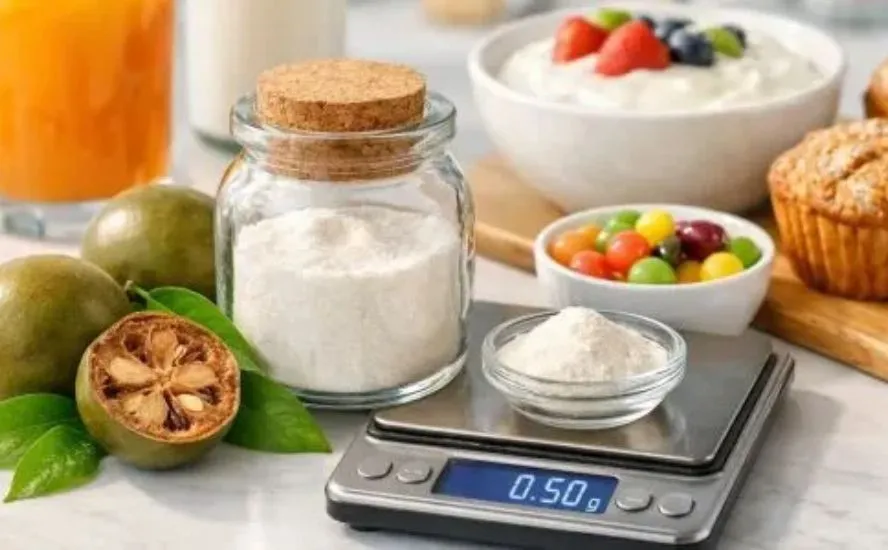
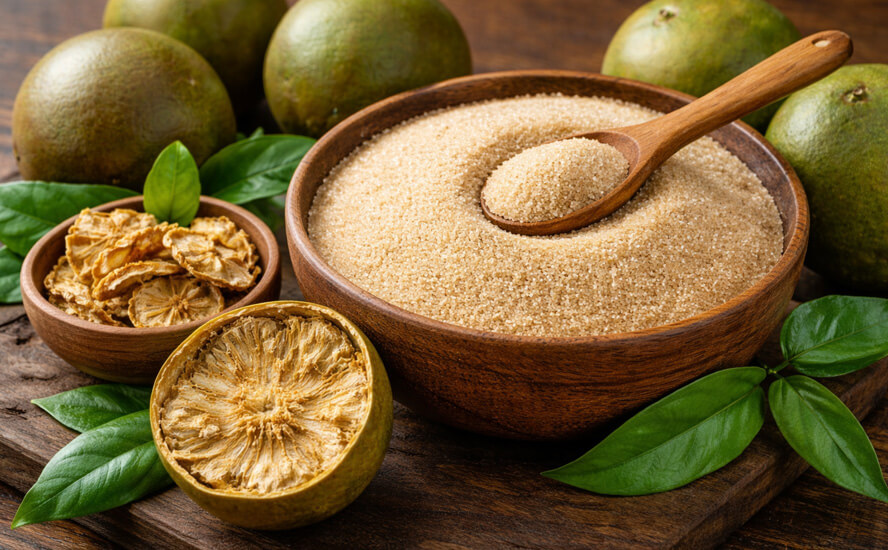
Monk fruit powder is the dry, free-flowing form of monk fruit extract, and it is often the preferred format for FMCG manufacturers working with dry-mix applications, powdered beverages, protein supplements, baked goods, and confectionery. It blends consistently, measures reliably, and integrates smoothly into standard dry-blend processes without special handling equipment.
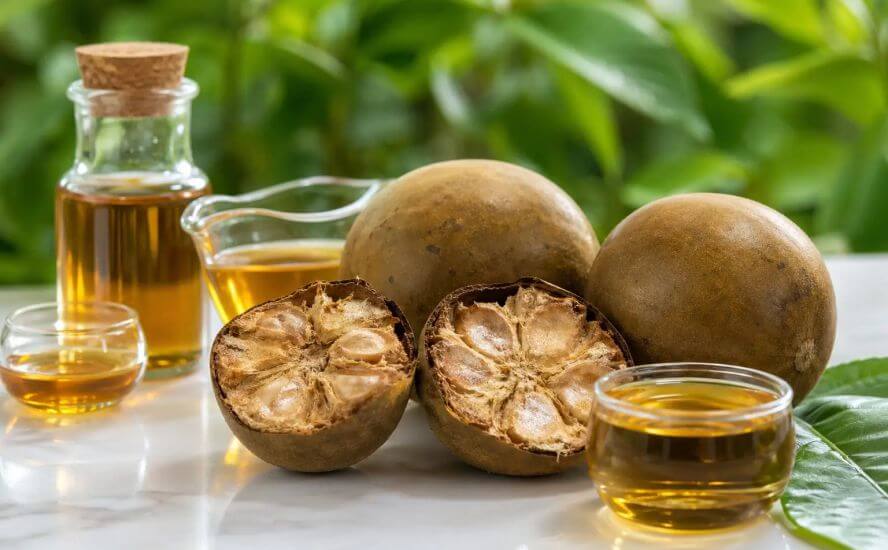
For liquid applications — sodas, juices, dairy drinks, syrups — liquid monk fruit extract offers better dispersion and more precise dosing. At Monk Nectar, we supply both formats so your production team can work with whatever suits your existing line setup.
One practical consideration: because monk fruit extract and monk fruit powder deliver sweetness at such a concentrated level, you will likely need to add a bulking agent — such as erythritol, inulin, or maltodextrin — when replacing sugar in recipes that depend on volume and mouthfeel. Your formulation team will need to account for this in the recipe development phase, but it is a straightforward adjustment with no significant impact on production complexity.
Which FMCG Product Categories Benefit Most from Monk Fruit Extract?
Monk fruit extract works across a wide range of categories. Here are the segments where it delivers the strongest commercial benefit:
- Beverages (RTD teas, flavoured waters, fruit drinks, functional drinks): The clean sweetness profile works particularly well in liquid formats where aftertaste is most perceptible.
- Dairy and plant-based dairy alternatives (flavoured yoghurt, milk drinks, ice cream): Zero calories and a natural taste make monk fruit extract a strong fit for better-for-you dairy innovation.
- Bakery and snacks: Thermal stability means the extract survives baking without performance loss. This opens up a genuinely natural-sweetener option for biscuits, protein bars, and snack cakes.
- Nutraceuticals and dietary supplements: In protein powders, vitamins, and health shots, consumers expect clean ingredients. Monk fruit extract aligns with that expectation naturally.
- Confectionery: Chocolates, gummies, and mints formulated with monk fruit extract can credibly carry low-sugar or no-added-sugar claims.
- Table-top sweeteners and sweetener blends: Monk fruit powder is an excellent base ingredient for retail sweetener products targeting health-conscious consumers.
Monk Fruit Extract and the Sugar Reduction Mandate: What FMCG Brands Need to Know
Governments and health authorities across the world are actively pushing for sugar reduction in packaged food and beverages. Sugar taxes are already in place in multiple countries, and front-of-pack labelling regulations are tightening. For FMCG manufacturers, this is not a hypothetical challenge — it is a live business risk that affects pricing, market access, and brand positioning.
Monk fruit extract gives you a concrete, commercially ready path to meaningful sugar reduction. You can reformulate existing SKUs to bring down the total sugar content while maintaining the taste that built your consumer base. You can launch new product lines that genuinely deliver on health claims. And you can do both without reaching for artificial sweeteners that are increasingly viewed with suspicion by health-aware buyers.
The clean-label, naturally derived positioning of monk fruit extract also gives your marketing team a genuine, defensible story to tell — in-store, online, and across social media. That authenticity matters in an environment where consumers actively scrutinise brand claims.
Sourcing Monk Fruit Extract at Commercial Scale: What to Look For
Not all monk fruit extract is the same. The quality, consistency, and mogroside concentration can vary significantly between suppliers. When you evaluate a source for commercial-scale procurement, these are the factors that matter most:
- Mogroside V content: Higher mogroside V percentage means greater sweetness intensity and better taste clarity. Always request a Certificate of Analysis with mogroside V levels clearly stated.
- Solubility and particle size (for monk fruit powder): Consistent particle size ensures even blending and avoids clumping in dry-mix applications.
- Absence of fillers and carriers: Some suppliers blend their extract heavily with bulking agents. Know what you are buying and at what concentration.
- Traceability and food safety documentation: Look for suppliers who can provide batch traceability, FSSC 22000 or equivalent food safety certification, and clear country-of-origin documentation.
- Regulatory documentation support: Especially if you are launching in multiple markets, your supplier should be able to provide documentation that supports your regulatory submissions.
At Monk Nectar, we supply monk fruit extract with full documentation support, consistent mogroside V specification, and the flexibility to work with your production team on the format and concentration that suits your application. You can explore our monk fruit extract range at monkfruit.in/monk-fruit-extract.php.
Common Questions FMCG Manufacturers Ask About Monk Fruit Extract
Does monk fruit extract work well in combination with other sweeteners?
Yes, and in many cases a blended approach gives the best results. Monk fruit extract is frequently combined with erythritol, stevia, or allulose to achieve a balanced sweetness profile, improve mouthfeel, and manage formulation cost. The synergy between monk fruit and erythritol, in particular, is well-established in the industry.
Is monk fruit extract suitable for products targeting children?
Monk fruit extract has no known safety concerns for children and carries GRAS status, which means it has been evaluated as safe for general use. It offers a meaningful opportunity to reduce sugar in kids’ food and beverage products without compromising palatability.
How does monk fruit extract affect shelf life?
Monk fruit extract is chemically stable and does not promote microbial growth the way sugar does. In products where sugar has traditionally acted as a preservative, you may need to adjust your formulation accordingly, but monk fruit extract itself does not shorten shelf life and in some cases can be beneficial from a stability standpoint.
What is the recommended usage level for monk fruit powder in dry applications?
Usage levels vary by product type and desired sweetness intensity, but typical levels range from 0.02% to 0.5% by weight depending on the mogroside V concentration of your extract and the other ingredients in the formulation. Your supplier should provide application-specific guidance, and Monk Nectar’s technical team can assist with starting-point recommendations for your product category.
Conclusion
The benefits of monk fruit extract for FMCG product manufacturers are concrete and commercially significant. You get a zero-calorie, zero-glycaemic natural sweetener with excellent heat stability, a clean taste profile, strong regulatory acceptance, and a label that your consumers can read and trust. Whether you are reducing sugar in an existing bestseller or building a new health-focused product line from scratch, monk fruit extract gives you the ingredient performance you need and the brand story your marketing team can work with.
The demand for better-for-you products is not slowing down. Manufacturers who move early on clean-label sugar reduction will own a structural advantage in their categories. Monk fruit extract is one of the most powerful tools available to get you there — and it is available at commercial scale right now.
Monk Nectar supplies premium-grade monk fruit extract and monk fruit powder to food and beverage manufacturers across India and internationally. If you want to discuss your formulation requirements or request a sample, visit us at monkfruit.in or explore our monk fruit extract product page directly.