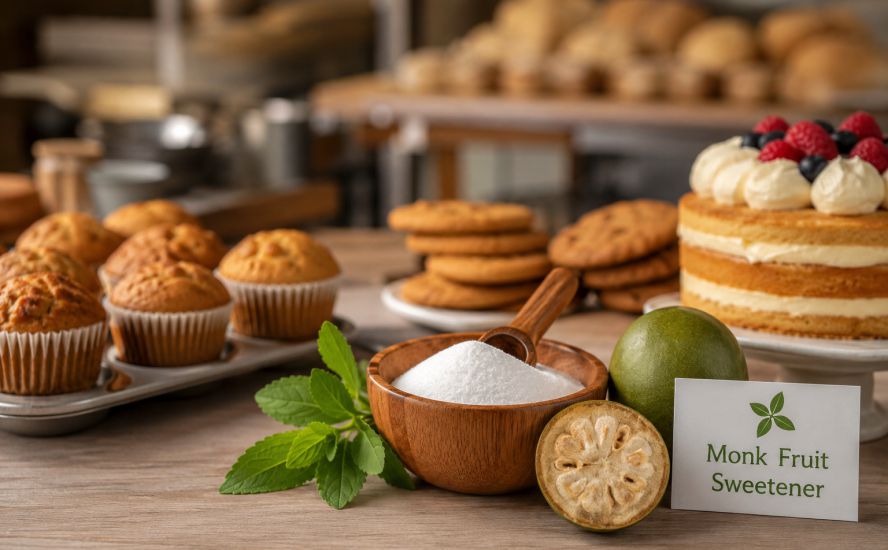
Sugar reduction has moved from a niche request to a core formulation requirement across the commercial bakery sector. Retailers are asking for lower-sugar claims on pack, regulators in several markets are tightening front-of-pack labeling rules, and consumers are reading ingredient panels before they read prices. For bakery manufacturers, this shift creates a genuine formulation problem: sugar does far more than sweeten. It builds structure, holds moisture, feeds browning, and controls shelf life. Removing it without a capable replacement usually means a product that looks, tastes, or ages differently than the original.
Monk fruit sweetener has become one of the most practical answers to this problem for manufacturers who need to cut added sugar without cutting product quality. Extracted from the Luo Han Guo fruit, monk fruit sweetener delivers intense sweetness from natural compounds called mogrosides, with zero calories and no bitter aftertaste. Because it is plant-derived and free from artificial additives, it fits cleanly into clean-label strategies that food brands are actively building their reputations around.
This article is written for people who make sourcing and formulation decisions: R&D teams, procurement managers, plant heads, and brand owners evaluating a monk fruit ingredient supplier for cakes, cookies, biscuits, pastries, and other baked goods. It covers how monk fruit sweetener performs in commercial baking systems, what formulation adjustments manufacturers should plan for, how sourcing quality affects finished-product consistency, and why Monk Nectar® has built its business around supplying real, undiluted monk fruit extract to food manufacturers who cannot afford inconsistent ingredients. By the end, you will have a clear, technically grounded view of where monk fruit sweetener fits in your product line and how to evaluate it against your own formulation goals.
What Is Monk Fruit Sweetener and Why Does It Matter for Bakery Manufacturers?
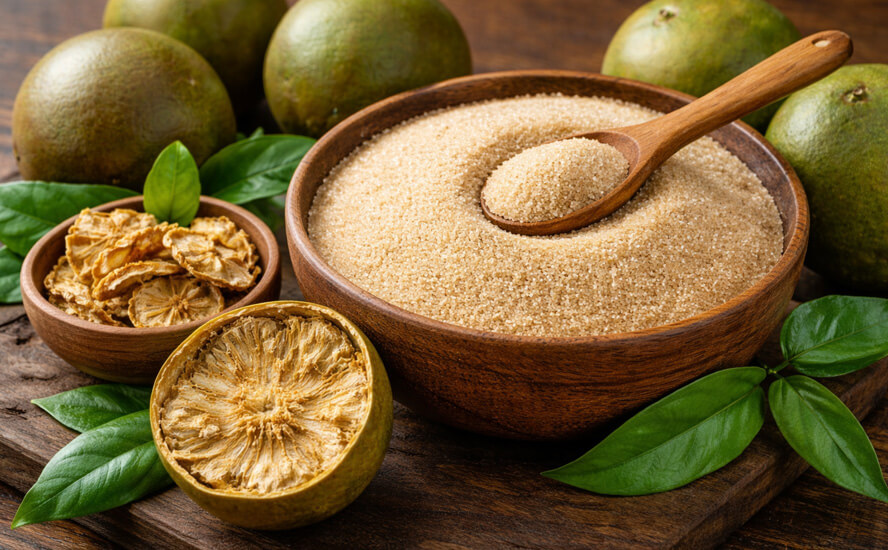
Monk fruit sweetener is a natural, zero-calorie sweetener derived from monk fruit, also known as lo han guo or Swingle fruit, a small round fruit native to southern China. The sweetness comes from mogrosides, naturally occurring compounds in the fruit that are far sweeter than sucrose but do not behave like sugar metabolically. This is why monk fruit sweetener does not raise blood sugar levels the way sucrose does, which makes it relevant not only for weight-management positioning but also for diabetic-friendly and low-glycemic product lines.
For bakery manufacturers, the significance of monk fruit sweetener sits at the intersection of three pressures that are shaping the category right now:
Consumer demand for reduced-sugar bakery products. Shoppers increasingly check nutrition labels for added sugar content, and bakery categories such as cookies, muffins, and pastries are frequently flagged as high-sugar indulgences. Brands that can credibly reduce added sugar while keeping taste intact gain shelf differentiation.
Clean-label expectations. Modern buyers do not just want less sugar; they want recognizable ingredients. A sweetener that reads as a fruit extract on the label supports a clean-label story far better than a synthetic or heavily processed alternative.
Formulation performance requirements. Unlike some high-intensity sweeteners that carry a lingering bitter or metallic note, monk fruit sweetener delivers a clean, sugar-like sweetness with no bitter aftertaste, which matters enormously in baked goods where off-notes are difficult to mask.
Manufacturers evaluating a monk fruit sweetener for bakery applications should understand it as a high-intensity sweetening agent rather than a one-to-one sugar replacement. It solves the sweetness problem effectively, but a complete sugar-reduction formulation typically also requires attention to bulking, moisture retention, and browning, which this article addresses in the formulation sections below.
It also matters where the extract is sourced from. Purity varies significantly across suppliers, and a blended or diluted extract can undermine an otherwise well-designed reformulation project by delivering inconsistent sweetness from batch to batch. A manufacturer’s finished product is only as reliable as the raw ingredients feeding into it, which is why sourcing decisions for a monk fruit ingredient supplier deserve the same technical scrutiny as any other functional ingredient in the formulation.
How Does Monk Fruit Sweetener Work in Commercial Baking?
Monk fruit sweetener works by supplying concentrated sweetness through mogrosides rather than through sucrose molecules. Because mogrosides are many times sweeter than sugar by weight, only a small fraction of the volume is needed to match the sweetness level of a standard sugar-based recipe. Monk Nectar® supplies monk fruit extract in multiple purity grades so manufacturers can select the sweetness intensity that fits their process:
- MV15% grade, roughly 60 times sweeter than sugar
- MV25% grade, roughly 100 times sweeter than sugar
- MV50% grade, roughly 200 times sweeter than sugar
- Liquid grade, roughly 130 times sweeter than sugar
This grade range matters in commercial baking because different products need different handling. A high-purity powder grade suits dry-mix applications such as cookie and biscuit doughs where precise, small-dose incorporation is easier to control. A liquid grade integrates smoothly into batters, glazes, fillings, and syrups where a dry powder would need extra dispersion time.
Three technical properties determine how well a sweetener performs once it enters an oven, and monk fruit extract holds up well against all three:
Heat stability. Baking involves sustained temperatures well above 150°C for extended periods. A sweetener that degrades or changes flavor under heat will produce inconsistent results across a batch and across production runs. Monk fruit extract is heat stable, which allows it to survive standard baking cycles without breaking down or contributing off-flavors.
pH stability. Bakery formulations span a range of pH levels depending on leavening systems, dairy inclusion, and fruit components. A sweetener with good pH stability performs consistently whether the dough is closer to neutral or mildly acidic, which reduces the number of formulation variables a technical team needs to manage during sugar reduction.
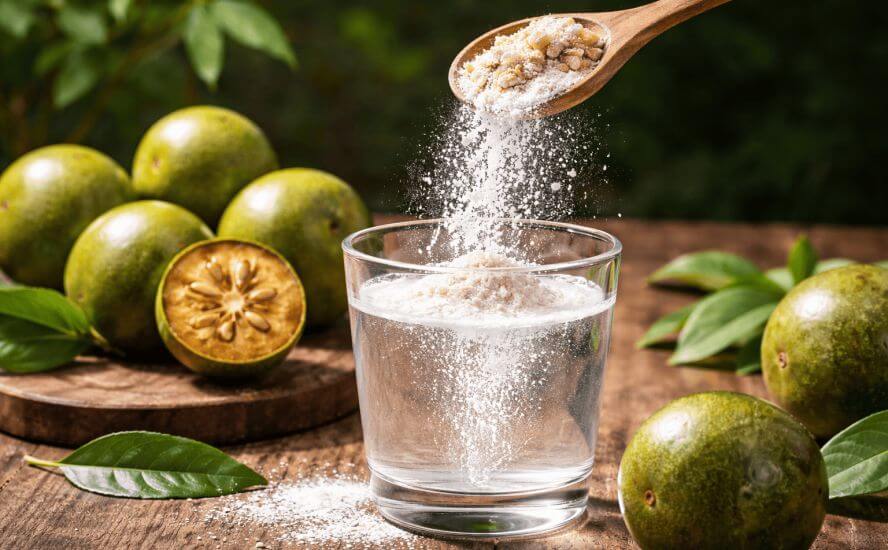
Water solubility. Monk fruit extract is fully water soluble, which supports even distribution through batters and doughs. Poor solubility in a sweetening ingredient tends to show up as uneven sweetness or grainy texture in the finished product, so solubility is a practical, not just theoretical, consideration for plant-scale mixing.
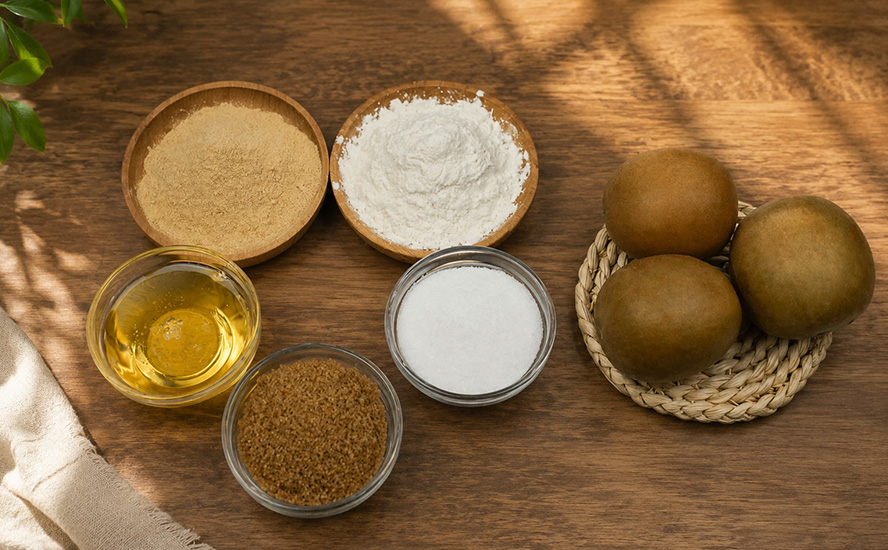
Because monk fruit sweetener carries intense sweetness in a small physical volume, formulators typically combine it with a bulking agent (such as polyols, fibers, or other approved bulking carbohydrates) when a full sugar replacement is required, since sugar also contributes structure and volume that a pure high-intensity sweetener cannot replace on its own. This is standard practice in sugar-reduction formulation work and is addressed further in the formulation section below.
What Are the Key Benefits of Monk Fruit Sweetener for Manufacturers?
Manufacturers do not adopt an ingredient because it sounds appealing on a spec sheet. They adopt it because it solves a commercial problem without creating three new ones. Monk fruit sweetener earns its place in commercial bakery formulations for several concrete reasons.
Zero calories with no blood sugar impact. Monk fruit extract is a zero-calorie sweetener that does not raise blood sugar levels, which supports labeling and marketing claims around reduced-calorie, diabetic-friendly, and low-glycemic bakery products. For manufacturers targeting the wellness, keto, and diabetic-friendly consumer segments, this is a functional benefit, not just a marketing angle.
Clean, sugar-like taste with no bitter aftertaste. Many high-intensity sweeteners carry a bitter or metallic note that becomes more noticeable at higher sweetness-equivalence levels, particularly in baked goods where flavors bake down and concentrate. Monk fruit sweetener is known specifically for delivering sweetness with no bitter aftertaste, which reduces the masking-agent burden on a formulation team and keeps the ingredient list shorter.
Clean-label positioning. Because monk fruit sweetener is naturally plant-based, non-GMO, gluten-free, and vegan, it supports label claims that resonate with the current wave of clean-label bakery development. A bakery brand can list a fruit-derived sweetener rather than a chemical name, which matters to shoppers who scan ingredient panels before purchase.
Compatibility across bakery categories. Monk fruit sweetener functions across a wide range of bakery formats, from cakes and muffins to cookies, biscuits, and pastries, as well as fillings, glazes, and coatings. This versatility allows a single monk fruit ingredient supplier relationship to serve multiple product lines rather than requiring different sweeteners for different formats.
Cost efficiency at the formulation level. Because monk fruit extract is used at very low dosage rates relative to its sweetness contribution, the actual cost impact on a formulation can be more efficient than it first appears on a per-kilogram basis. Manufacturers evaluating sugar reduction solutions for manufacturers should model cost per unit of sweetness delivered, not just raw ingredient price, when comparing options.
Antioxidant content. Monk fruit extract naturally contains antioxidant compounds (mogrosides) that offer additional nutritional interest beyond sweetness, supporting a more complete better-for-you positioning on pack.
Regulatory alignment with natural sweetener trends. As more markets tighten scrutiny on artificial sweeteners and added-sugar labeling, a naturally derived sweetener with an established safety profile gives manufacturers a more defensible long-term ingredient strategy compared to relying on synthetic alternatives that may face future regulatory or consumer-sentiment headwinds.
Together, these benefits explain why monk fruit sweetener has moved from a niche specialty ingredient into a mainstream option considered by manufacturers building reduced-sugar and better-for-you bakery lines.
For procurement and R&D teams building a business case internally, it helps to frame these benefits against a specific product goal rather than treating them as a generic ingredient list. A team targeting a diabetic-friendly cookie line weighs the zero-glycemic-impact benefit most heavily, while a team focused on a premium clean-label repositioning of an existing cake range prioritizes the ingredient transparency and taste-cleanliness benefits instead. Matching the sourcing conversation to the actual commercial goal, rather than a broad “healthier sweetener” brief, tends to produce a faster and more defensible formulation decision.
Can Monk Fruit Sweetener Replace Sugar in Bakery Products?
This is the single most common question manufacturers ask before committing to a sourcing decision, and the honest, technically accurate answer is: yes, with formulation adjustments.
Monk fruit sweetener can replace the sweetness function of sugar effectively in a wide range of recipes, including baked goods, beverages, and sauces. Because it is significantly sweeter than sugar, dosage must be recalculated rather than substituted at a one-to-one ratio. A recipe built for granulated sugar cannot simply swap in an equal weight of monk fruit extract; the correct approach is to calculate the sweetness-equivalent dose based on the grade being used and adjust from there.
The more important formulation consideration is what sugar does beyond sweetness, because a bakery manufacturer replacing sugar needs to account for these functions separately:
Bulk and structure. Sugar contributes physical volume to batters and doughs. In cookies and cakes, it affects spread, crumb structure, and density. When reducing sugar with a high-intensity sweetener like monk fruit extract, manufacturers typically need a bulking agent, such as polyols, fibers, or other approved bulk carbohydrates, to replace the lost volume and maintain the expected texture.
Moisture retention. Sugar is hygroscopic, meaning it holds onto water and helps baked goods stay moist over their shelf life. Reducing sugar without addressing moisture retention separately can lead to faster staling or a drier finished product. Formulators often adjust fat content, add humectants, or fine-tune baking time and temperature to compensate.
Browning and caramelization. Sugar participates directly in the Maillard reaction and caramelization, which produce the golden-brown color and toasted flavor notes expected in cookies, biscuits, and crusts. Monk fruit sweetener does not caramelize like sugar, so products that rely heavily on browning for visual appeal or flavor development may need adjustments such as small amounts of reducing sugars, egg wash modifications, or bake-temperature tweaks to achieve the expected color.
Fermentation in yeast-leavened products. In bread and other yeast-raised products, sugar also feeds yeast fermentation. Since monk fruit sweetener does not ferment the way sugar does, formulations for yeast-leavened bakery items need a small amount of fermentable sugar retained or an alternative fermentation aid, even while using monk fruit sweetener to carry most of the sweetness load.
The practical takeaway for manufacturers: monk fruit sweetener is an excellent sweetness-replacement ingredient, and it is best deployed as part of a broader sugar-reduction system rather than treated as a direct drop-in replacement. Manufacturers who plan for bulk, moisture, browning, and fermentation from the start of the reformulation process get to market-ready products faster and with fewer costly pilot-batch failures.
This is also where working with an experienced monk fruit supplier for bakery applications adds real value. A supplier who understands these formulation dependencies can guide grade selection, dosage calculation, and application-specific handling, rather than simply shipping a commodity ingredient and leaving the technical work entirely to the manufacturer’s R&D team.
A practical formulation checklist for teams starting a reformulation project:
- Calculate the sweetness-equivalent dose for the selected monk fruit grade rather than substituting by weight against sugar.
- Identify a bulking agent to replace the physical volume sugar previously contributed, and test at pilot scale before full production runs.
- Assess moisture retention needs separately, since monk fruit sweetener does not carry sugar’s hygroscopic properties on its own.
- Plan for browning through a small proportion of reducing sugars, adjusted bake time, or temperature changes, particularly for cookies, biscuits, and crusts where surface color affects consumer perception.
- For yeast-leavened products, retain enough fermentable sugar to support proper rise while using monk fruit sweetener to reduce the overall sugar load.
- Run sensory panels at each pilot stage, since sweetness perception in baked goods changes after cooling and again after a few days of shelf storage.
Manufacturers who work through this checklist systematically, rather than treating monk fruit sweetener as a simple ingredient swap, typically reach a market-ready formulation in fewer pilot-batch cycles.
Why Are Manufacturers Choosing Monk Fruit Extract Over Other Sweeteners?
The natural sweetener category has expanded quickly, and manufacturers now have several sugar-alternative options to evaluate: sugar alcohols, stevia, synthetic high-intensity sweeteners, and monk fruit extract among them. Several practical factors are driving more bakery manufacturers toward monk fruit sweetener specifically.
Taste profile. Sweetness quality matters as much as sweetness intensity. Monk fruit sweetener delivers a clean, sugar-like taste with no bitter aftertaste, which is a meaningful advantage over sweeteners known for lingering bitterness or a licorice-like note that becomes more pronounced in baked applications where flavors concentrate during baking and cooling.
Ingredient story. A fruit extract communicates more clearly to consumers than a chemical or highly processed sweetener name. Clean label sweeteners that consumers can recognize and understand support stronger brand trust, which matters when a manufacturer is trying to convince a health-conscious buyer to try a reduced-sugar version of a familiar product.
Category-wide applicability. Monk fruit extract performs across beverages, dairy, confectionery, nutraceuticals, and bakery, which gives manufacturers with multi-category product lines a single ingredient relationship to manage rather than sourcing different sweeteners for different divisions.
Zero-calorie, low-glycemic profile. As demand grows for products aimed at diabetic-friendly, keto, and weight-conscious consumers, an ingredient that delivers sweetness without calories or blood sugar impact gives manufacturers a functional basis for these claims, rather than a marketing claim built on a technicality.
Purity and consistency of supply. Manufacturers running continuous production lines cannot tolerate batch-to-batch variability in sweetness intensity, solubility, or flavor. This is where ingredient sourcing quality becomes a genuine commercial risk factor, not just a technical preference. A monk fruit ingredient supplier offering 100% pure, undiluted, non-blended extract, without fillers or artificial additives, reduces the risk of formulation drift that can occur when lower-purity or adulterated monk fruit products are used.
Monk Nectar® has built its supply model specifically around this last point: offering real, undiluted monk fruit extract with no blends and no artificial additives, in both liquid and powder form, so manufacturers can standardize their formulations on a consistent, high-purity ingredient rather than reformulating every time a batch varies.
What Market Trends Are Driving Sugar Reduction in Commercial Baking?
Sugar reduction is not a passing trend in the bakery sector; it reflects a structural shift in how consumers evaluate packaged food and how regulators expect brands to communicate nutrition information. Manufacturers building a long-term ingredient strategy around monk fruit sweetener benefit from understanding the forces behind this shift, since they shape both product development priorities and go-to-market messaging.
Consumer preference is moving toward transparency, not just reduction. Shoppers are not only asking for less sugar; they are asking to understand what replaced it. A sweetener that reads as a recognizable fruit extract, rather than a synthetic compound with a multi-syllable chemical name, supports a more transparent label story that builds trust at the shelf. This is one reason clean label bakery ingredients have gained so much attention among brand owners repositioning legacy products for health-conscious shoppers.
Regulatory attention on added sugar is increasing. Several markets have introduced or strengthened front-of-pack labeling requirements, added-sugar thresholds, and health-tax structures tied to sugar content. Bakery categories such as biscuits, cakes, and packaged pastries are frequently named in these discussions because they contribute meaningfully to daily added-sugar intake. Manufacturers who build sugar-reduction capability into their formulation process now are better positioned to respond to future regulatory tightening rather than scrambling to reformulate under a compliance deadline.
Diabetic-friendly and low-glycemic positioning is expanding beyond niche categories. Reduced-sugar and no-added-sugar bakery products used to sit in a small specialty aisle. That segment has broadened considerably, with mainstream bakery brands introducing diabetic-friendly and low-glycemic variants of familiar products. Because monk fruit extract does not raise blood sugar levels, it gives formulators a functional basis for these claims rather than a marketing workaround.
Cost efficiency remains a genuine manufacturing concern, not just a nutrition story. Reformulating for sugar reduction is only commercially viable if it does not significantly inflate production cost or disrupt existing manufacturing lines. Because monk fruit sweetener is used at very low dosage levels relative to the sweetness it delivers, manufacturers often find that the effective cost contribution per unit of finished product is more manageable than the raw per-kilogram ingredient price suggests. Modeling cost per unit of sweetness, rather than cost per kilogram of ingredient, gives procurement teams a more accurate comparison across sweetener options.
Product innovation is opening new bakery segments. Reduced-sugar reformulation is not limited to defending existing product lines. Manufacturers are using natural sweeteners like monk fruit extract to launch entirely new bakery segments: keto-friendly cookies, diabetic-friendly cakes, protein-forward pastries with reduced sugar loads, and premium “better-for-you” biscuit lines positioned alongside traditional offerings rather than replacing them outright. This gives manufacturers a growth lever in addition to a defensive reformulation strategy.
Taken together, these trends explain why demand for a dependable natural sweetener for commercial baking has grown steadily rather than spiking around a single trend cycle. Manufacturers who treat sugar reduction as a durable formulation capability, supported by a consistent ingredient supply chain, are better positioned than those treating it as a one-off reformulation project.
What Should Businesses Consider When Sourcing Monk Fruit Sweetener?
Sourcing decisions for a high-intensity sweetener carry more downstream consequences than sourcing a commodity ingredient, because sweetness intensity, solubility, and flavor cleanliness directly determine finished-product quality. Manufacturers evaluating a monk fruit sweetener supplier should assess the following before finalizing a sourcing agreement.
Purity and blend transparency. Ask directly whether the extract is 100% pure monk fruit extract or a blended product diluted with other sweeteners or carriers. Blended products can create unpredictable sweetness intensity and inconsistent labeling accuracy. A supplier who is transparent about purity, and who explicitly avoids fillers, blends, and artificial additives, gives a manufacturer a more stable foundation to formulate against.
Grade selection matched to application. Since sweetness intensity varies by grade (roughly 60x, 100x, 130x for liquid, and 200x depending on the grade selected), manufacturers should work with their supplier to select the grade that matches their specific bakery application, whether that is a dry-mix cookie formulation, a liquid glaze, or a filling. The wrong grade choice at the sourcing stage creates avoidable dosage recalculation work later.
Format flexibility. Bakery manufacturers running different product lines often need both liquid and powder forms, liquid for batters, glazes, and syrups, and powder for dry mixes and doughs. A supplier offering both formats under one relationship simplifies procurement and reduces the need to qualify multiple vendors.
Solubility and processing behavior. Confirm that the extract is fully water soluble and performs predictably under the manufacturer’s specific mixing, temperature, and pH conditions. Requesting samples for pilot-batch testing before committing to volume orders is standard practice and should be encouraged, not resisted, by a serious ingredient partner.
Consistency of supply and dedicated technical support. Production-scale manufacturers need reliable lead times and consistent quality across repeat orders. A supplier offering dedicated team support and responsive communication reduces the operational risk of stockouts or last-minute formulation scrambles.
Sample access before commitment. A trustworthy monk fruit ingredient supplier should make free samples available so manufacturers can validate performance in their own formulations before moving to commercial-scale purchasing. This lowers the risk of committing to an untested ingredient at volume.
Monk Nectar® addresses each of these sourcing considerations directly: 100% pure, non-blended monk fruit extract with zero adulteration, available in multiple grades and in both liquid and powder form, with free samples and dedicated support available to manufacturers evaluating the ingredient for the first time. For procurement teams comparing a bakery ingredient supplier shortlist, purity transparency and format flexibility are the two factors most likely to prevent costly reformulation problems down the line.
Monk Fruit Sweetener Applications Across Bakery Categories
Different bakery formats place different demands on a sweetener, and understanding these differences helps manufacturers plan realistic reformulation timelines.
Cakes and muffins. Cake batters rely on sugar for tenderness, moisture, and volume as well as sweetness. When reformulating with monk fruit sweetener, manufacturers typically pair it with a bulking system to preserve batter volume and crumb softness, while adjusting fat or moisture levels slightly to compensate for sugar’s hygroscopic contribution. The clean taste of monk fruit sweetener is an advantage here because cake flavor profiles are often delicate and easily disrupted by off-notes from other high-intensity sweeteners.
Cookies and biscuits. These products depend heavily on sugar for spread control and surface browning. Because monk fruit sweetener does not caramelize like sugar, manufacturers reformulating cookies and biscuits often retain a small proportion of reducing sugars or adjust bake time and temperature to achieve the expected golden color, while monk fruit extract carries the bulk of the sweetness load at a fraction of the caloric and glycemic contribution.
Pastries and fillings. Fruit fillings, cream fillings, and glazes benefit from the liquid grade of monk fruit extract, which disperses evenly without the graininess that can occur with solid sweeteners in delicate fillings. Because monk fruit sweetener is heat stable, it holds its sweetness through baking and any subsequent reheating or reheating-adjacent processing steps like glazing under heat lamps.
Bread and yeast-leavened products. Since sugar also feeds yeast fermentation in bread doughs, manufacturers usually retain a portion of fermentable sugar even while using monk fruit sweetener to reduce the overall sugar load and sweetness contribution. This hybrid approach lets bakeries claim meaningful sugar reduction without compromising rise and crumb structure.
Table-top and finishing applications. Beyond the core dough or batter, monk fruit sweetener also works well in finishing applications such as glazes, icing, and coatings, where its clean sweetness and solubility support a polished final product appearance without adding a noticeable aftertaste to the surface layer that consumers taste first.
Across all these formats, the common thread is that monk fruit sweetener performs its core job, sweetness, exceptionally well, while manufacturers plan complementary adjustments for the structural and browning functions that sugar traditionally provided. This is standard sugar-reduction formulation practice and is manageable with the right technical guidance from an experienced supplier.
Shelf life and packaging considerations. Reformulated bakery products need the same shelf-life validation as any new product launch. Since monk fruit sweetener does not contribute to moisture retention the way sugar does, manufacturers should run accelerated shelf-life testing on reformulated products to confirm that texture, moisture content, and microbial stability hold up over the intended shelf-life window. This is particularly relevant for soft-baked cookies and moist cake formats, where staling is more noticeable to consumers than in drier products like crackers or hard biscuits.
Scaling from pilot batch to full production. A formulation that performs well in a small test batch does not always scale cleanly to full production volumes, particularly with high-intensity sweeteners where small dosing errors have an outsized impact on sweetness perception. Manufacturers should validate dosing accuracy at production scale, confirm that mixing equipment achieves even dispersion of the sweetener through the batter or dough, and re-run sensory evaluation on production-scale batches before finalizing the commercial formulation. Suppliers who provide technical support through this scale-up phase help manufacturers avoid costly full-batch rejections.
Frequently Asked Questions About Monk Fruit Sweetener for Commercial Baking
What is monk fruit sweetener? Monk fruit sweetener is a natural, zero-calorie sweetener extracted from the monk fruit (Luo Han Guo), a small fruit native to southern China. Its sweetness comes from mogrosides, natural compounds that are many times sweeter than sugar by weight, without the calories or the blood-sugar impact of sucrose.
How does monk fruit sweetener benefit commercial bakery manufacturers? It allows manufacturers to reduce added sugar while maintaining a clean, sugar-like taste with no bitter aftertaste. It is heat stable, pH stable, and fully water soluble, which supports reliable performance across standard baking processes. It also supports clean-label, non-GMO, gluten-free, and vegan product claims, and it delivers zero calories with no blood sugar impact, which strengthens better-for-you and diabetic-friendly product positioning.
Can monk fruit sweetener replace sugar in bakery products? Yes, monk fruit sweetener can replace the sweetness function of sugar in cakes, cookies, biscuits, pastries, and other baked goods. Because it is significantly sweeter than sugar, dosage needs to be recalculated rather than substituted one-to-one. Manufacturers typically pair it with a bulking agent to replace lost volume, and they may need to adjust for browning and moisture retention, since monk fruit sweetener does not caramelize like sugar and does not carry sugar’s moisture-holding properties on its own.
Why are manufacturers choosing monk fruit extract over other sweeteners? Manufacturers cite its clean taste with no bitter aftertaste, its natural and recognizable ingredient story, its zero-calorie and low-glycemic profile, and its versatility across bakery, beverage, dairy, and confectionery applications. Sourcing from a supplier offering 100% pure, non-blended extract also reduces the batch-to-batch variability risk that comes with diluted or adulterated monk fruit products.
What should businesses consider when sourcing monk fruit sweetener? Businesses should confirm purity and blend transparency, select the correct sweetness grade for their specific application, check format availability (liquid versus powder), verify solubility and processing behavior through sample testing, and evaluate the supplier’s consistency of supply and technical support. Requesting free samples before committing to volume orders is a practical way to validate performance ahead of full-scale production.
Does monk fruit sweetener affect the texture of baked goods? Monk fruit sweetener itself does not change the chemistry of a dough or batter the way sugar’s bulk and hygroscopic properties do. Texture changes in reformulated products typically come from the reduction in overall sugar volume, not from the monk fruit extract itself. This is why bulking agents and moisture-management adjustments are built into a sugar-reduction formulation alongside monk fruit sweetener, rather than treating the sweetener as the sole variable affecting texture.
Is monk fruit sweetener suitable for large-scale commercial production? Yes. Monk fruit sweetener is heat stable, pH stable, and fully water soluble, all of which support predictable performance at production scale rather than only in small test batches. Manufacturers running continuous mixing and baking lines can incorporate it into standard batching procedures once dosage and dispersion have been validated during pilot testing.
What formats does monk fruit sweetener come in for bakery manufacturing? Monk fruit extract is available in both liquid and powder form, across multiple purity grades ranging from roughly 60 times to 200 times sweeter than sugar. Powder grades suit dry-mix applications like cookie and biscuit doughs, while liquid grade integrates more easily into batters, glazes, and fillings.
Why Monk Nectar® Is a Reliable Monk Fruit Sweetener Partner for Manufacturers
Bakery manufacturers evaluating a long-term sweetener strategy need a supplier who understands both the ingredient and the formulation demands of commercial baking. Monk Nectar® offers 100% pure, undiluted, non-blended monk fruit extract, free from fillers and artificial additives, sourced with a focus on zero adulteration and consistent purity across batches. The extract is available across multiple sweetness grades, from 60x to 200x sweeter than sugar, and in both liquid and powder form, giving manufacturers the flexibility to match the right grade and format to cakes, cookies, biscuits, pastries, and other bakery formats without compromising on taste, texture, or label integrity.
For manufacturers, this translates into a monk fruit sweetener source that supports clean-label claims, zero-calorie and low-glycemic positioning, and a genuinely clean sweetness profile with no bitter aftertaste, all backed by dedicated support and free samples for formulation testing before any volume commitment. Whether the goal is a sugar-reduced cookie line, a diabetic-friendly cake range, or a broader better-for-you bakery portfolio, working with a monk fruit supplier for bakery applications that prioritizes purity and technical transparency reduces formulation risk and shortens the path from pilot batch to shelf-ready product.
If your team is exploring sugar reduction solutions for manufacturers, evaluating clean label sweeteners, or comparing natural sugar alternatives for an upcoming bakery reformulation project, Monk Nectar® is ready to support that process with real, pure monk fruit extract and hands-on technical guidance. Request a free sample, discuss your specific formulation requirements with our team, and see how monk fruit sweetener can help your bakery products meet today’s sugar-reduction expectations without sacrificing the taste and texture your customers already expect.
Reach out to Monk Nectar® through our website, over WhatsApp, or by phone to speak directly with our team about grade selection, dosage guidance, and sample availability for your specific bakery application. Whether you run a single production line or manage sourcing across multiple bakery brands, our team is set up to support manufacturers at every stage, from initial sample testing through repeat commercial-volume orders. Contact Monk Nectar® today to start building a better-for-you bakery line with a monk fruit ingredient supplier built for manufacturers.